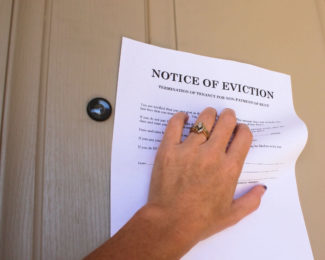
Join us on July 27th as Managing Partner, Puneet Singh will be teaching a free webinar on the California Eviction Process! Whether you are a seasoned property manager or new to rental housing, this seminar will provide you with helpful tips on terminating the tenancy, navigating through the eviction process, and recent developments that impact unlawful detainer actions. To register, click on the following link: https://zoom.us/webinar/register/WN_S4QlCi0WRgyTtNfilCDsiw
Blog
-

New San Jose Law Prohibits Pass Through of Charges to Tenants
New San Jose Law Prohibits Pass Through of Charges to Tenants
Puneet Singh, Esq.
June 2018
Effective June 8, 2018, a new law for the City of San Jose amending the Apartment Rent Ordinance will go into effect.[1]The Ordinance prohibits a landlord from passing through charges that are assigned to tenants through ratio utility billing or similar unmetered allocation arrangements, limits the amount and manner in which other fees may be charged to tenants, and provides for a one-time rent increase for units with existing passthrough agreements.
Existing agreements that contain provisions for payment or pass through of utility services (including ratio utility billing to tenants) are void. Charges that are prohibited include fees for utility services, such as electricity, natural gas, telephone, water, waste water, sewer, and refuse or waste management services.
The new law further places limits on other fees as follows:
Excess Replacement Fees: Landlords are prohibited from charging a tenant a replacement fee for a key or security card that exceeds the actual replacement costs plus ten dollars ($10.00) unless approved by a petition or the rent regulations.
Excess Bounced Check Service Fees: Landlords are prohibited from charging a tenant a service charge for a dishonored or bounced check in excess of the amounts allowed under California Civil Code Section 1719(a)(1).[2]
Late Payment Fees: Landlords are prohibited from charging a tenant a fee for late payment of rent exceeding a total of five percent (5%) of the monthly rent for each payment of rent that is three (3) or more days late.
Application Screening Fees: Landlords are prohibited from charging a tenant an application screening fee in excess of the amount allowed under California Civil Code Section 1950.6(b).[3]
Security Deposits: Except as provided in SJMC Section 17.23.320(C), a security deposit cannot be raised for the duration of the tenancy. [4]
If a Landlord has a written agreement prior to January 1, 2018, that provides for the pass through of charges for water, sewer, trash, unmetered gas, or electricity, then the landlord can file a petition with the City for a one-time offset increase. Any increase, if awarded, shall be permitted as follows:
Water, Sewer and/or Trash: The offset increase amount will be the lesser of: (i) the average of the monthly charges paid by the tenant in 2017 under the pass through agreement for water, sewer, and/or trash or (ii) $86 for a studio, $91 for a one-bedroom, $102 for a two-bedroom and $149 for a three bedroom.
Unmetered Gas/Electricity: The offset increase amount will be the lesser of: (i) the average of the monthly charges paid by the tenant in 2017 under the pass through agreement for gas and/or electricity, or (ii) $36 for a studio, $58 for a one-bedroom, $70 for a two-bedroom and $84 for a three bedroom.
Furthermore, the new law prohibits a landlord from passing through any charge to a tenant unless the charge is clearly listed in the rental agreement and the rent invoice (if any) and is accompanied by a true and correct copy of the invoice or bill paid by the landlord for such a charge.
The ordinance does not prohibit a government entity or nonprofit administering the voucher from imposing conditions based on regulations with respect to utility payments on Rental Voucher Units. Lastly, no offset increase is allowed if the pass through or passthrough agreement was as the subject of a hearing officer decision or voluntary agreement that disallowed the pass through, or if the unit is rental voucher unit.
It is important to note that only those properties that are subject to the City of San Jose Apartment Rent Ordinance are subject to the provisions of the new law.[5]
Additional Resources:
A copy of the new Ordinance can be found at:
http://www.sanjoseca.gov/DocumentCenter/View/76753
A copy of the City of San Jose Apartment Rent Ordinance can be found at:
http://www.sanjoseca.gov/DocumentCenter/View/73543
NOTE: This article is for informational purposes only and should not be construed as legal advice. For legal advice please contact an experienced attorney. For more information contact the PKS Law Group, P.C. by visiting www.pks-lawgroup.comor email info@pks-lawgroup.com
[1]Ordinance No. 30090; Section 17.23.1130 of Chapter 17.23 of Title 17 of the San Jose Municipal Code.
[2]Cal. Civ. Code Section 1719(a)(1) provides that any person who passes a check on insufficient funds shall be liable to the payee for the amount of the check and a service charge payable to the payee for an amount not to exceed $25.00 for the first check passed on insufficient funds and an amount not to exceed $35.00 for each subsequent check that the payee passed on insufficient funds.
[3]Cal. Civ. Code Section 1950.6(b) provides that the amount of the application screening fee shall not be greater than the actual out-of-pocket costs of gathering information concerning the applicant, including, but not limited to, the cost of using a tenant screening service or a consumer credit reporting service, and the reasonable value of time spent by the landlord or his or her agent in obtaining information on the applicant. In no case shall the amount of the application screening fee charged by the landlord or his or her agent be greater than thirty dollars ($30) per applicant. The thirty dollar ($30) application screening fee may be adjusted annually by the landlord or his or her agent commensurate with an increase in the Consumer Price Index, beginning on January 1, 1998.
[4]SJMC Section 17.23.320(C) provides that a tenant may file a petition with their landlord for a one-time payment or increase in security deposit for providing a new service or a service that was expressly prohibited by a written rental agreement.
[5]Properties that are covered by San Jose’s Apartment Rent Ordinance include apartments with three or more units that were built and occupied prior to September 7, 1979. Rental housing developments exempted from the ordinance include single family homes, in-law units/granny flats/accessory dwelling units, duplexes, condominiums, townhomes, hotels, boarding houses rented to transient guests for periods of less than 30 days, nonprofit homes for the aged, school dormitories, rental units owned and operated by any government agency, any new rental units first rented after September 7, 1979, and properties in unincorporated areas of San Jose.
-

New Oakland Law on Tenant Buy Out Agreements Takes Effect
May 2, 2018
Puneet Singh, Esq.
Effective May 1, 2018, Oakland’s Tenant Move Out Agreement Ordinance took effect governing the terms that a Landlord must comply with when offering tenants compensation (often referred to as “Cash for Keys”) to vacate their rental unit.
Pursuant to the new law the Landlord must do the following:
1) Provide a Pre-Move Out Negotiation Disclosure Form to the tenant prior to entering into negotiations for move out.
2) File a Pre-Move Out Disclosure Certification Form with the Oakland Rent Board prior to entering into negotiations for move out, and
3) File the executed Move Out Agreement with the Oakland Rent Board within 45 days of signing the agreement.
To access the Pre-Move Out Negotiation Disclosure Form and the Pre-Move Disclosure Certification Form, visit the City of Oakland website located at:
http://City of Oakland Website
NOTE: This article is for informational purposes only and should not be construed as legal advice. For legal advice please contact an experienced attorney. For more information visit the PKS Law Group, P.C. at www.pks-lawgroup.com or email info@pks-lawgroup.com